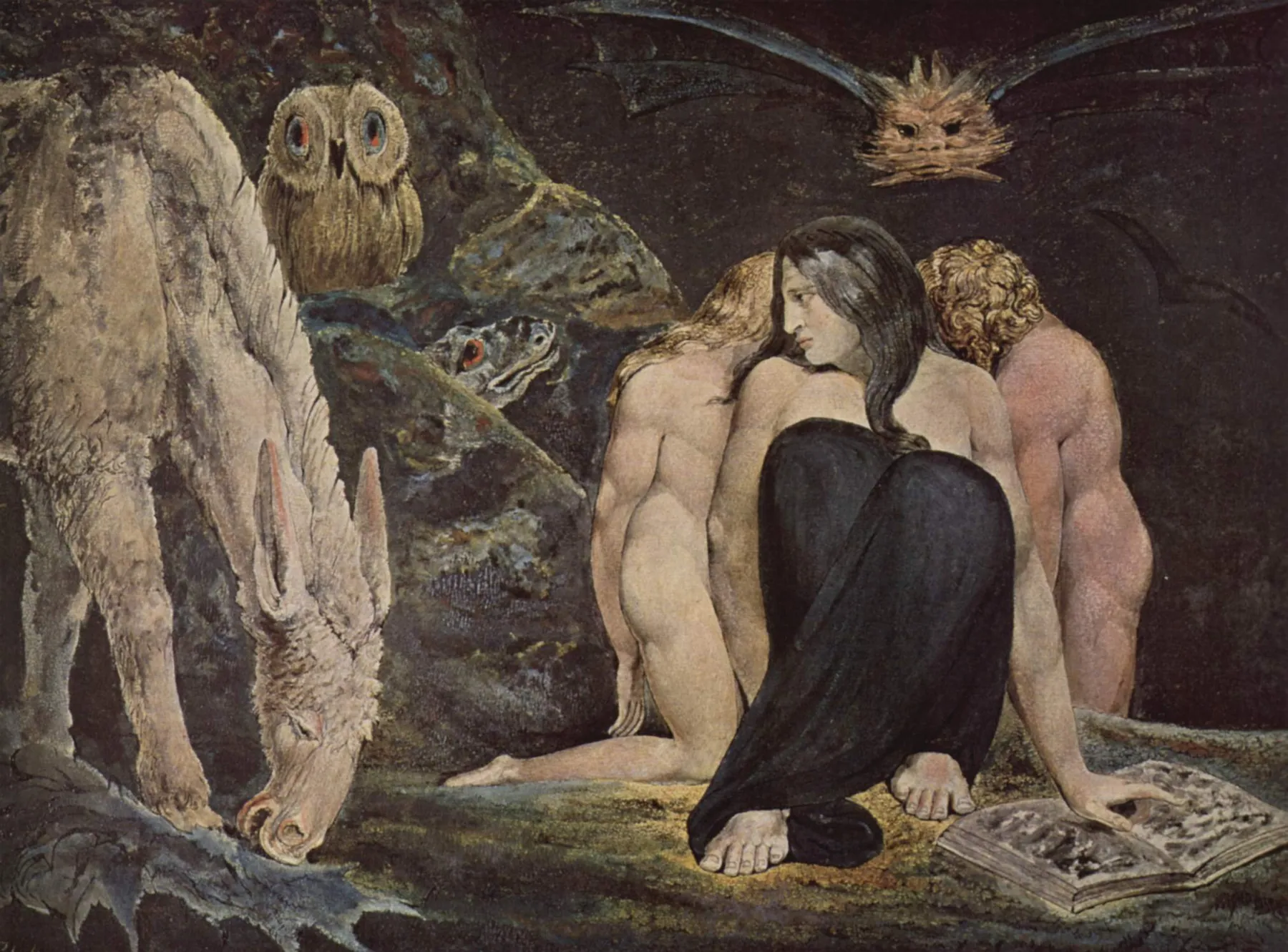
The Night of Enitharmon's Joy
William Blake, 1795
From €29Museum-quality print, also on canvas and framed.
Frequently asked questions
Which size should I choose?
This work is available in 30 × 40 cm. As a guide: 30 × 40 cm (about 12 × 16 in) for shelves, corners or gallery walls; 50 × 70 cm (about 20 × 28 in) above a dresser, a headboard or a desk; 70 × 100 cm (about 28 × 39 in) as the centrepiece of a living room or the wall above the sofa. Below the buy buttons you can see it to scale above a 2-metre sofa.
Does it come framed?
The print arrives unframed with a white border, ready to frame. If you choose a black or oak frame, it arrives mounted behind acrylic glazing, ready to hang. Canvases come stretched on a wooden frame.
When will it arrive?
Printed to order at the lab closest to your address. It arrives in 4–8 working days in Spain and the EU, and in 6–12 working days in the US, Mexico and other destinations.
What if it arrives damaged?
Email us a photo within 30 days of delivery and we will send you a new one free of charge or refund you.
Can I send it as a gift?
Yes. At checkout you can write a gift message and ship it to the recipient's name and address. The parcel shows no prices.
About the work
- Artist
- William Blake
- Date
- 1795
- Medium
- Colour print with pen, ink and watercolour retouching on paper
- Dimensions
- Aprox. 43,9 × 58,1 cm (plancha); hoja de papel de mayor tamaño según registro del Metropolitan Museum
- Collection
- Tate (Tate Gallery / Tate Britain, London)
- Print up to
- 30 × 40 cm
- Reference
- XDV-4305
What the museum label doesn't tell you
Look at the three figures: they share one seated body, as if grown from a single trunk, yet each head turns a different way. For over a century, historians called her Hecate, the Greek goddess of dark witchcraft. A 1990 study proved otherwise: she is Enitharmon, a goddess Blake invented for his own private mythology. The donkey, the owl, the bat with a human face are still there, but they no longer guard an ancient deity, only a figure that existed solely inside one poet's mind. Does it change anything, knowing the evil on display has no classical roots at all?