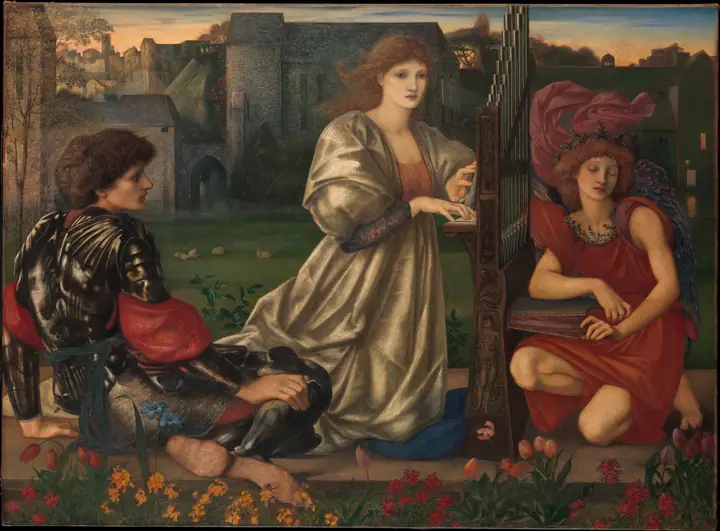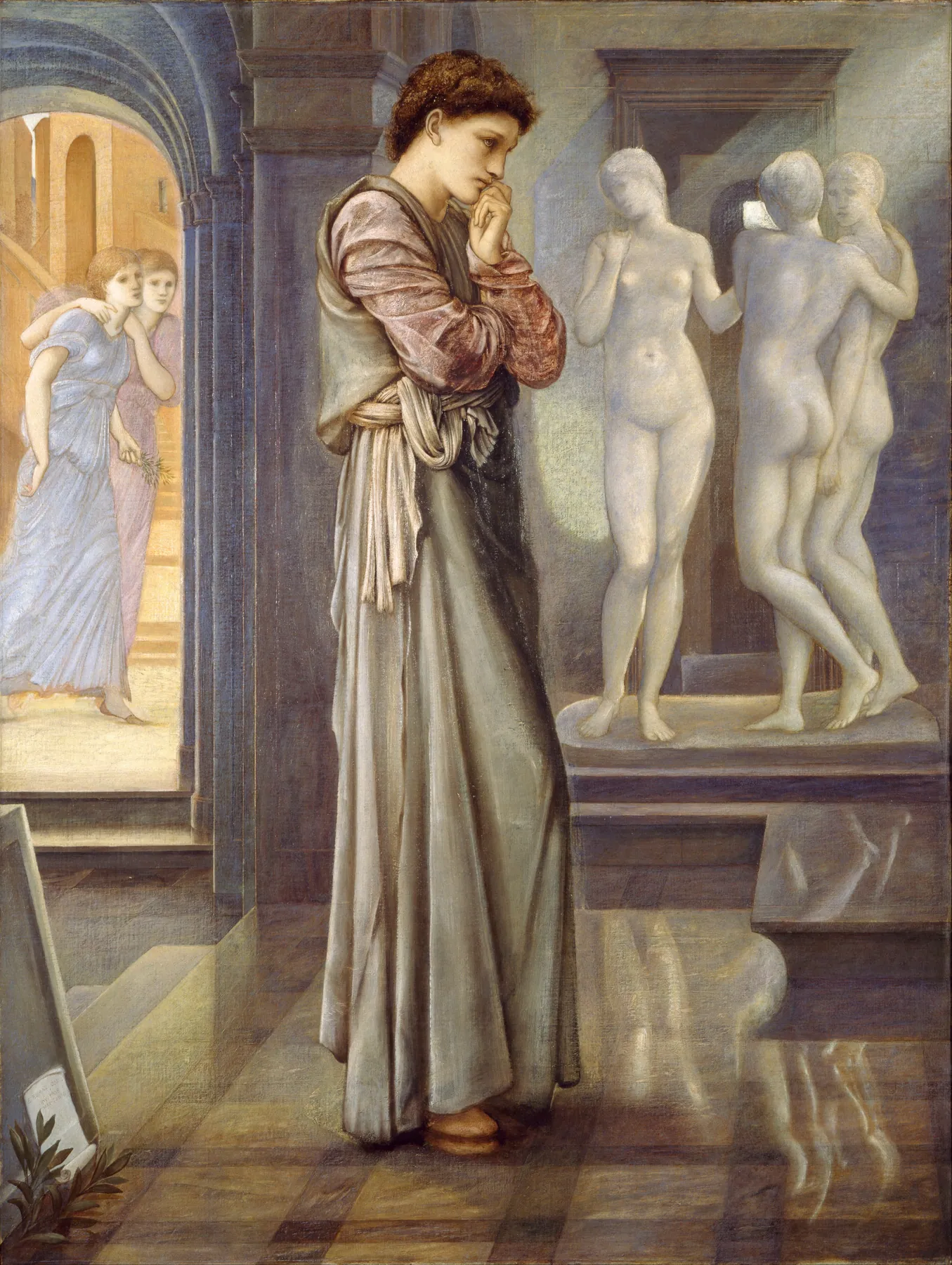
Pygmalion and the Image
Edward Burne-Jones, 1879
From €29Museum-quality print, also on canvas and framed.
Frequently asked questions
Which size should I choose?
This work is available in 30 × 40 cm, 50 × 70 cm, 70 × 100 cm. As a guide: 30 × 40 cm (about 12 × 16 in) for shelves, corners or gallery walls; 50 × 70 cm (about 20 × 28 in) above a dresser, a headboard or a desk; 70 × 100 cm (about 28 × 39 in) as the centrepiece of a living room or the wall above the sofa. Below the buy buttons you can see it to scale above a 2-metre sofa.
Does it come framed?
The print arrives unframed with a white border, ready to frame. If you choose a black or oak frame, it arrives mounted behind acrylic glazing, ready to hang. Canvases come stretched on a wooden frame.
When will it arrive?
Printed to order at the lab closest to your address. It arrives in 4–8 working days in Spain and the EU, and in 6–12 working days in the US, Mexico and other destinations.
What if it arrives damaged?
Email us a photo within 30 days of delivery and we will send you a new one free of charge or refund you.
Can I send it as a gift?
Yes. At checkout you can write a gift message and ship it to the recipient's name and address. The parcel shows no prices.
About the work
- Artist
- Edward Burne-Jones
- Date
- 1879
- Medium
- Oil on canvas
- Dimensions
- 99.4 x 76.6 cm (dimensión documentada para 'The Soul Attains', una de las cuatro escenas)
- Collection
- Birmingham Museum & Art Gallery (Birmingham Museums Trust)
- Print up to
- 70 × 100 cm
- Reference
- XDV-1116
What the museum label doesn't tell you
Look closely at the marble women behind him: there are three, not four. Burne-Jones painted this myth twice, and in the earlier version he placed four background figures — the Horae, personifications of time. A decade later he swapped them for the Three Graces instead. It sounds like a small change, but it isn't: the emphasis shifts from time passing to beauty itself, the same turn that pushed Burne-Jones deeper into Aestheticism. Pygmalion isn't even looking at his future Galatea yet — that comes later — he's staring at other men's statues, hesitating, while two living women slip out the door behind him. Preferring the untouchable before creating something he can touch?