Frequently asked questions
Which size should I choose?
This work is available in 30 × 40 cm, 50 × 70 cm. As a guide: 30 × 40 cm (about 12 × 16 in) for shelves, corners or gallery walls; 50 × 70 cm (about 20 × 28 in) above a dresser, a headboard or a desk; 70 × 100 cm (about 28 × 39 in) as the centrepiece of a living room or the wall above the sofa. Below the buy buttons you can see it to scale above a 2-metre sofa.
Does it come framed?
The print arrives unframed with a white border, ready to frame. If you choose a black or oak frame, it arrives mounted behind acrylic glazing, ready to hang. Canvases come stretched on a wooden frame.
When will it arrive?
Printed to order at the lab closest to your address. It arrives in 4–8 working days in Spain and the EU, and in 6–12 working days in the US, Mexico and other destinations.
What if it arrives damaged?
Email us a photo within 30 days of delivery and we will send you a new one free of charge or refund you.
Can I send it as a gift?
Yes. At checkout you can write a gift message and ship it to the recipient's name and address. The parcel shows no prices.
About the work
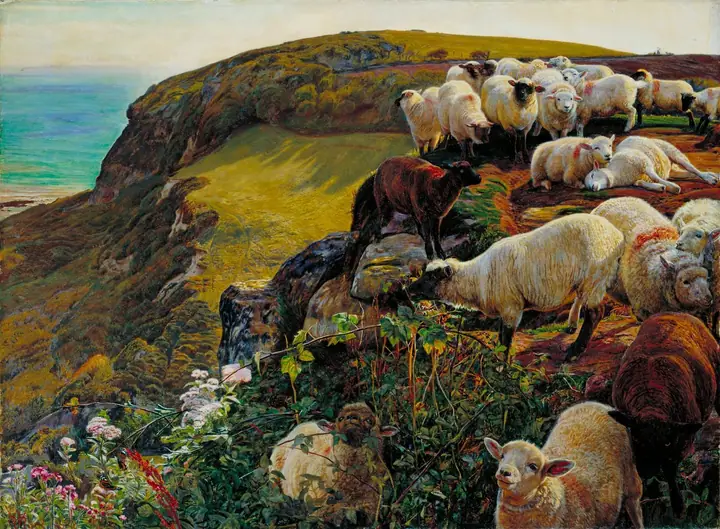
- Artist
- William Holman Hunt
- Date
- 1856
- Medium
- Oil on canvas
- Dimensions
- 86 × 140 cm (34 × 55 in), según ficha de Wikimedia Commons
- Collection
- Lady Lever Art Gallery, Port Sunlight (National Museums Liverpool)
- Print up to
- 50 × 70 cm
- Reference
- XDV-4312
What the museum label doesn't tell you
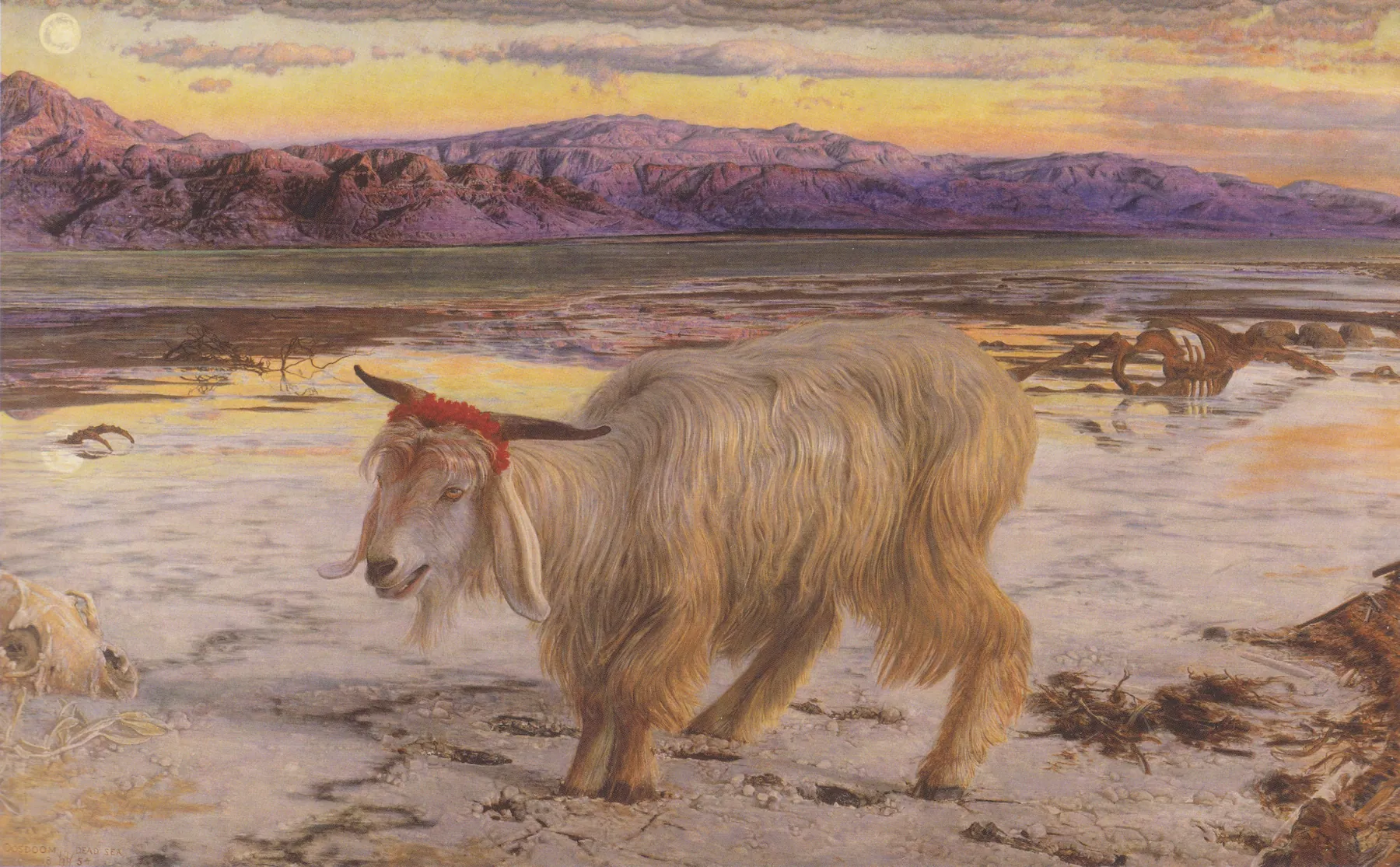
Look at the goat's eye - it isn't staring into empty space, it's staring at you. That single detail turns a near-documentary Dead Sea landscape into an act of direct complicity. This is the larger, muted version Hunt exhibited at the Royal Academy in 1856; a smaller, brighter one with a rainbow stayed in Manchester. Barely visible on the shore, an animal skeleton hints at what awaits this creature loaded with someone else's sins. The dealer Gambart wanted a pious painting; he got, in his own words, 'a great goat.' What catches your eye first, the stare or the bones?