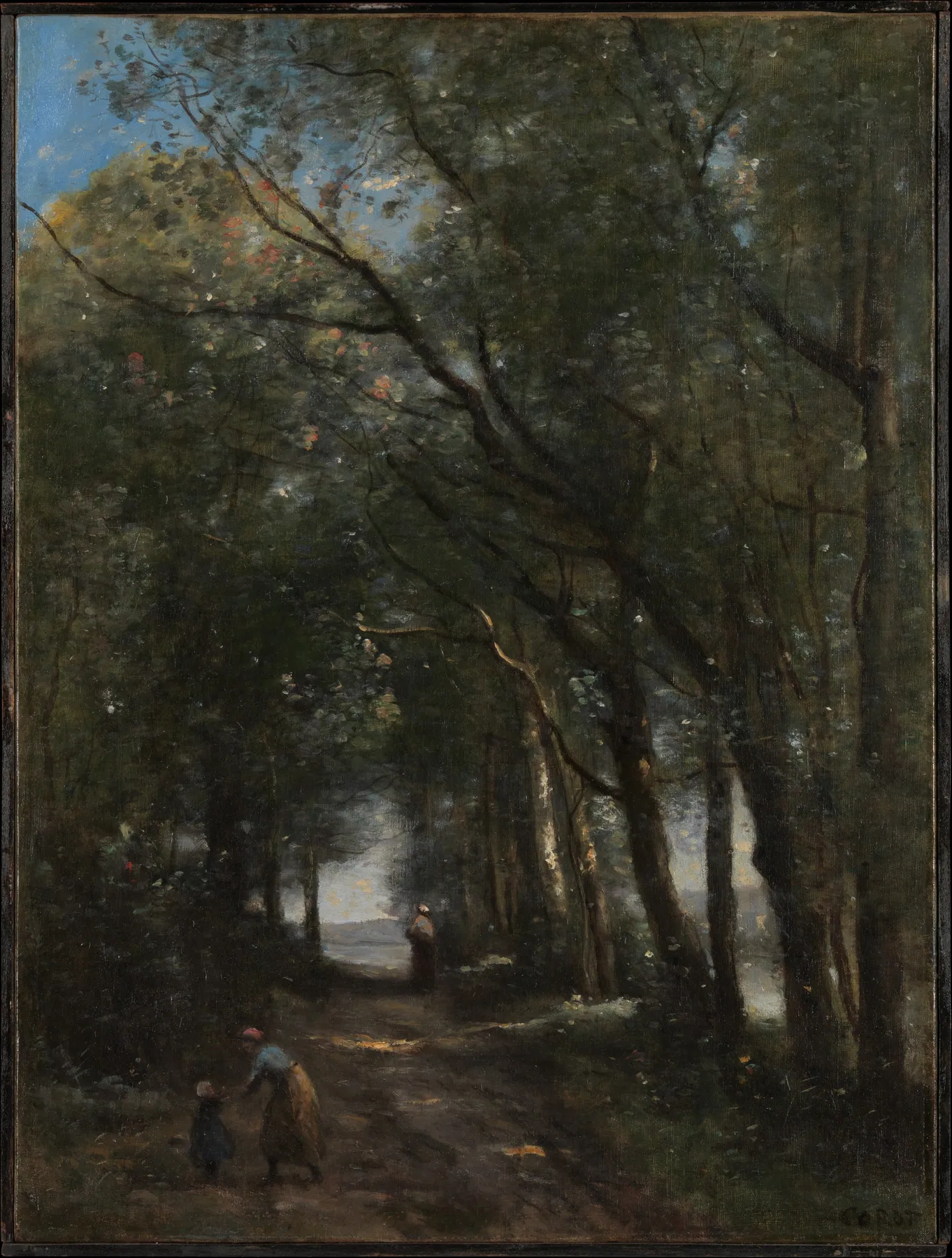
A Path under the Trees in Spring
Camille Corot, 1870
From €29Museum-quality print, also on canvas and framed.
Frequently asked questions
Which size should I choose?
This work is available in 30 × 40 cm, 50 × 70 cm. As a guide: 30 × 40 cm (about 12 × 16 in) for shelves, corners or gallery walls; 50 × 70 cm (about 20 × 28 in) above a dresser, a headboard or a desk; 70 × 100 cm (about 28 × 39 in) as the centrepiece of a living room or the wall above the sofa. Below the buy buttons you can see it to scale above a 2-metre sofa.
Does it come framed?
The print arrives unframed with a white border, ready to frame. If you choose a black or oak frame, it arrives mounted behind acrylic glazing, ready to hang. Canvases come stretched on a wooden frame.
When will it arrive?
Printed to order at the lab closest to your address. It arrives in 4–8 working days in Spain and the EU, and in 6–12 working days in the US, Mexico and other destinations.
What if it arrives damaged?
Email us a photo within 30 days of delivery and we will send you a new one free of charge or refund you.
Can I send it as a gift?
Yes. At checkout you can write a gift message and ship it to the recipient's name and address. The parcel shows no prices.
About the work
- Artist
- Camille Corot
- Date
- 1870
- Medium
- Oil on canvas
- Dimensions
- 55,2 cm (alto) x 41,1 cm (ancho)
- Collection
- Musée des Beaux-Arts de Reims
- Print up to
- 50 × 70 cm
- Reference
- XDV-0541
What the museum label doesn't tell you
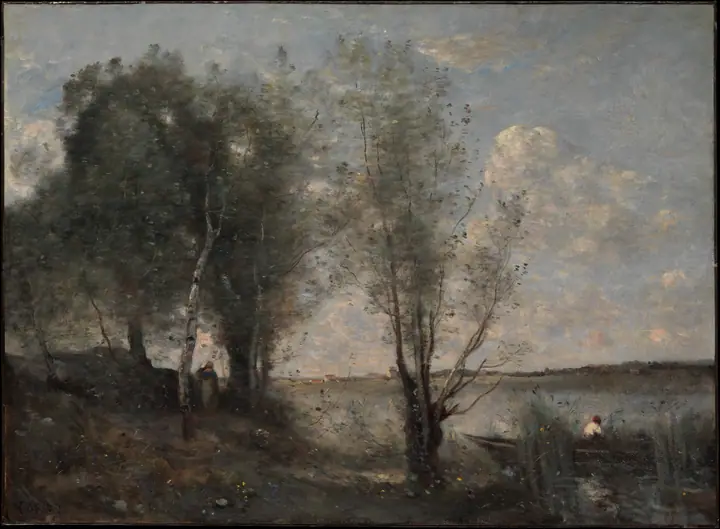
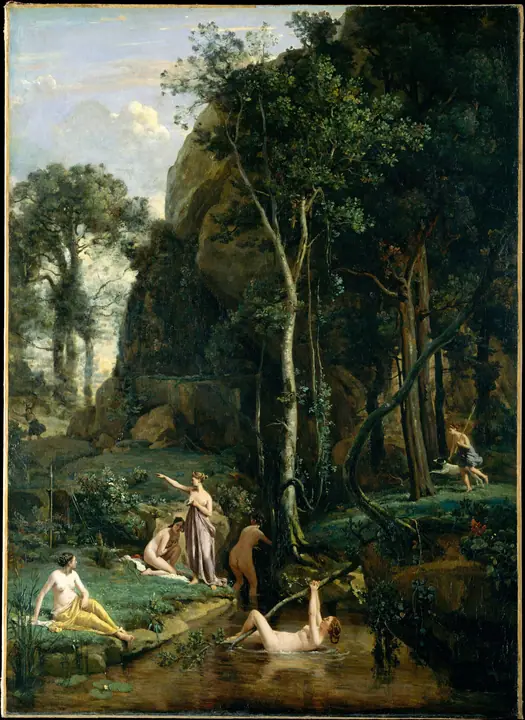
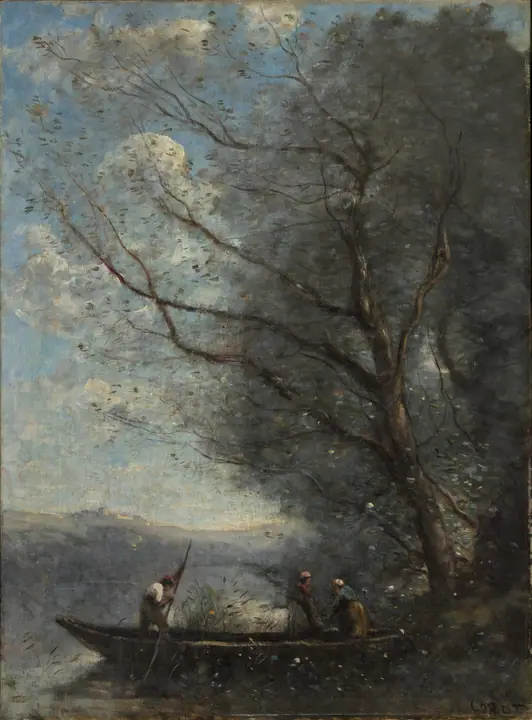
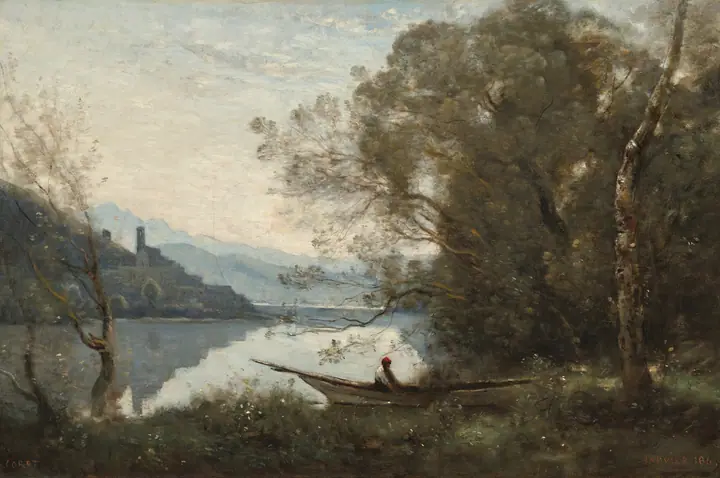
Corot paints the forest as a corridor closing in on itself: the trunks lean in from both sides until they almost meet above, leaving barely a thread of sky between them. Below, a woman with two children walks towards a solitary figure who has paused further ahead, where the light opens up again. The Met dates the work to around 1870–73, without further precision, and notes that Corot was still pursuing effects of natural light here, with loose, abbreviated brushstrokes in the foliage. Does the figure in the background wait for the family, or simply pass by without their paths crossing?